What Is Freight Forwarding? (When SMEs Need It)
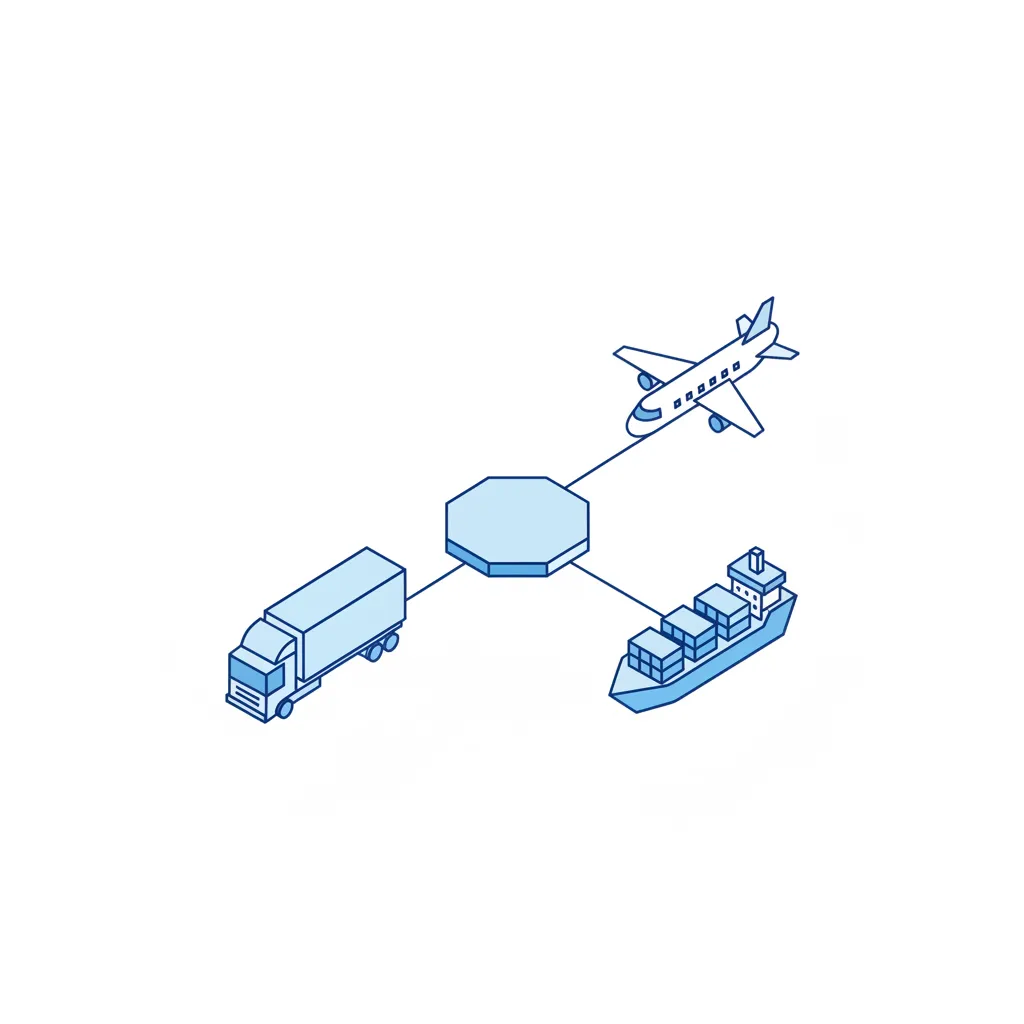
Freight forwarding is paying a specialist to organise a shipment for you instead of arranging the transport yourself. The forwarder finds the truck (or ship, or plane), books the space, handles the paperwork, and stays the single point of contact from pickup to delivery - but in most road cases the forwarder doesn't own the vehicle that moves your goods. So the freight forwarder meaning in practice is closer to "logistics coordinator" than "trucking company."
For a Baltic SME shipping a few loads a month, the real question isn't the textbook definition. It's whether that coordination layer earns its margin on the lanes you actually run.
Freight forwarding in one sentence
A freight forwarder arranges and manages the movement of your goods using other companies' transport, taking responsibility for the booking, documents, and handovers in exchange for a fee.
That's it. You hand over an origin, a destination, and a deadline; they turn it into a booked, documented, trackable shipment. They earn money on the difference between what carriers charge them and what they charge you, plus service fees.
What a forwarder actually does (and doesn't)
If you've ever wondered what does a freight forwarder do beyond "send it for me," here's the concrete list.
A good forwarder will:
- Source capacity - find a truck or container that fits your weight, volume (LDM/pallets), and timing.
- Quote and book - negotiate the rate, reserve the space, confirm pickup.
- Handle documents - CMR consignment note, packing list, customs paperwork for non-EU lanes.
- Coordinate handovers - groupage consolidation, cross-docking, multi-leg routing (road + sea + rail).
- Track and chase - follow the load, flag delays, sort out problems mid-transit.
- Carry liability - within the limits of the contract and conventions like CMR.
A forwarder usually does not:
- Own the truck or driver moving most road loads (they subcontract to carriers).
- Take ownership of your goods (they're your agent, not the buyer).
- Decide your Incoterms for you - that's your commercial call. If you're unsure who pays for which leg, the Incoterms reference shows where cost and risk pass between buyer and seller.
The split matters because it tells you what you're paying for: coordination and accountability, not metal on the road.
Forwarder vs carrier vs broker
The freight forwarder vs carrier confusion trips up a lot of SMEs, and brokers add a third role. Here's the clean version.
| Role | Owns the truck? | What they sell | Who they answer to |
|---|---|---|---|
| Carrier (haulier) | Yes | The physical transport | The shipper or forwarder who booked them |
| Freight forwarder | Usually no | Coordination, documents, liability, one contact | You, the shipper |
| Broker | No | A match between your load and a carrier | Often nobody after the match - thinner accountability |
In plain terms: the carrier drives. The forwarder organises and stays responsible end to end. The broker introduces a carrier and steps back. A forwarder is the heavier service - more hands-on, more accountable, and priced accordingly.
For a simple Vilnius→Hamburg full truckload you can talk to carriers yourself. For a three-leg shipment with a customs stop and a transhipment, the forwarder's coordination is worth real money.
When an SME needs a forwarder - and when direct carriers are cheaper
Use a forwarder when the complexity is high and your time is scarce. Go direct when the lane is simple and repeatable.
A forwarder usually pays off when:
- The route crosses non-EU borders (customs, duty, documentation).
- It's multimodal (road + sea, or road + rail) with handovers.
- You ship groupage / part loads that need consolidating.
- You don't have time or in-house knowledge to manage exceptions.
Direct carriers usually win when:
- It's a full or near-full truckload on a fixed EU lane (e.g. Vilnius→Hamburg).
- You run the same route often enough to know good carriers.
- The shipment is straightforward - standard pallets, no customs.
Here's why the second case matters for your margin. On a repeated lane, the forwarder's markup compounds every week.
Worked example: Vilnius → Hamburg FTL
| Item | Direct to carrier | Via forwarder |
|---|---|---|
| Distance | ~1,150 km | ~1,150 km |
| Carrier line-haul | €1,250 | €1,250 |
| Forwarder margin / fee | - | €150-€250 |
| Your total | ~€1,250 | ~€1,400-€1,500 |
| EUR/km to you | ~€1.09 | ~€1.22-€1.30 |
| Transit | 1-2 days | 1-2 days |
On a one-off, complex, or customs-heavy shipment that €150-€250 buys you real coordination and is often money well spent. On a lane you run every week with a 24t standard load, you're paying that margin 50 times a year for a route you already know.
That's exactly the gap UMERA closes. Skip the middle layer on lanes you run often - quote your own carriers directly, and when you send the same lane to five carriers you usually see a 15-30% spread, so the comparison itself pays for the effort.
When you do go direct, you still need clean paperwork. The CMR consignment note template gives you the standard document carriers expect, so cutting out the forwarder doesn't mean cutting corners on documentation.
What it costs and how forwarders price
Forwarders price in a few stacked layers, not one flat number. Understanding the stack helps you see where the margin sits.
- Line-haul - the carrier's rate, marked up. The base cost of moving the goods.
- Service / handling fee - a flat or percentage fee for coordination and documents.
- Customs / clearance - per declaration, on non-EU lanes (general information only - not customs, tax or legal advice).
- Accessorials - waiting time, tail-lift, ADR (dangerous goods), storage, redelivery.
For a standard EU road load, expect the forwarder's total to sit a clear margin above the bare carrier rate. The fee is justified when it removes work and risk you'd otherwise carry; it's pure cost when the lane is simple enough to handle yourself.
A practical rule: if you can name three reliable carriers for a lane off the top of your head, you probably don't need a forwarder for it.
FAQ
Is a freight forwarder the same as a carrier?
No. The carrier owns the truck and physically moves the goods. The freight forwarder arranges the shipment, handles documents, and stays your single point of contact - usually without owning any vehicle. That's the core of freight forwarder vs carrier: one drives, one coordinates.
Do I legally need a freight forwarder to ship across the EU?
No. Inside the EU you can contract a carrier directly with a CMR note and no customs. Forwarders become genuinely useful for non-EU borders, multimodal routes, or groupage - not for simple intra-EU full loads.
How much does freight forwarding cost?
It varies by lane and complexity, but expect the forwarder's total to sit a clear margin above the bare carrier rate, plus per-declaration customs fees on non-EU shipments and accessorials (waiting, tail-lift, ADR). On simple repeated EU lanes that margin is often avoidable.
What does a freight forwarder do that I can't do myself?
Mostly they save your time and absorb complexity: sourcing capacity, multi-leg coordination, customs documentation, and chasing exceptions mid-transit. On a straightforward full truckload you've shipped before, there's little a forwarder does that you can't.
Forwarder vs broker - what's the difference?
A broker just matches your load to a carrier and steps back, with thinner ongoing accountability. A forwarder coordinates the whole shipment, handles documents, and carries contractual liability end to end. The forwarder is the heavier, more accountable service.
When should an SME go direct instead of using a forwarder?
Go direct on full or near-full truckloads on fixed EU lanes you run often, where you already know good carriers and there's no customs. That's where the forwarder's margin compounds against you and quoting carriers yourself usually wins on price.
Ship smarter with UMERA
Paste an order - UMERA builds the RFQ and sends it to your own carriers in 60 seconds.